

As one: How a unified approach to defence industry is delivering for the Illawarra
And the local link to a 'world first' defence technology.

This edition of Future Proof is brought to you with the support of Colliers Wollongong.
As a local fishing boat headed out from Ulladulla harbour early on the morning of May 23, 2019, they spotted a small blue vessel bobbing between in the swell.
The unusual vessel had no crew on board and was entirely operating under its own power, with a “sail” made of solar panels and some of the most advanced engineering in the world, developed with the support of UOW researchers, tucked in within the enclosed blue hull.
The curious fishermen weren’t the only ones watching the vessel, however, with early trials already attracting the attention of Australian and international navies, as well as coastguards and marine park administrators.
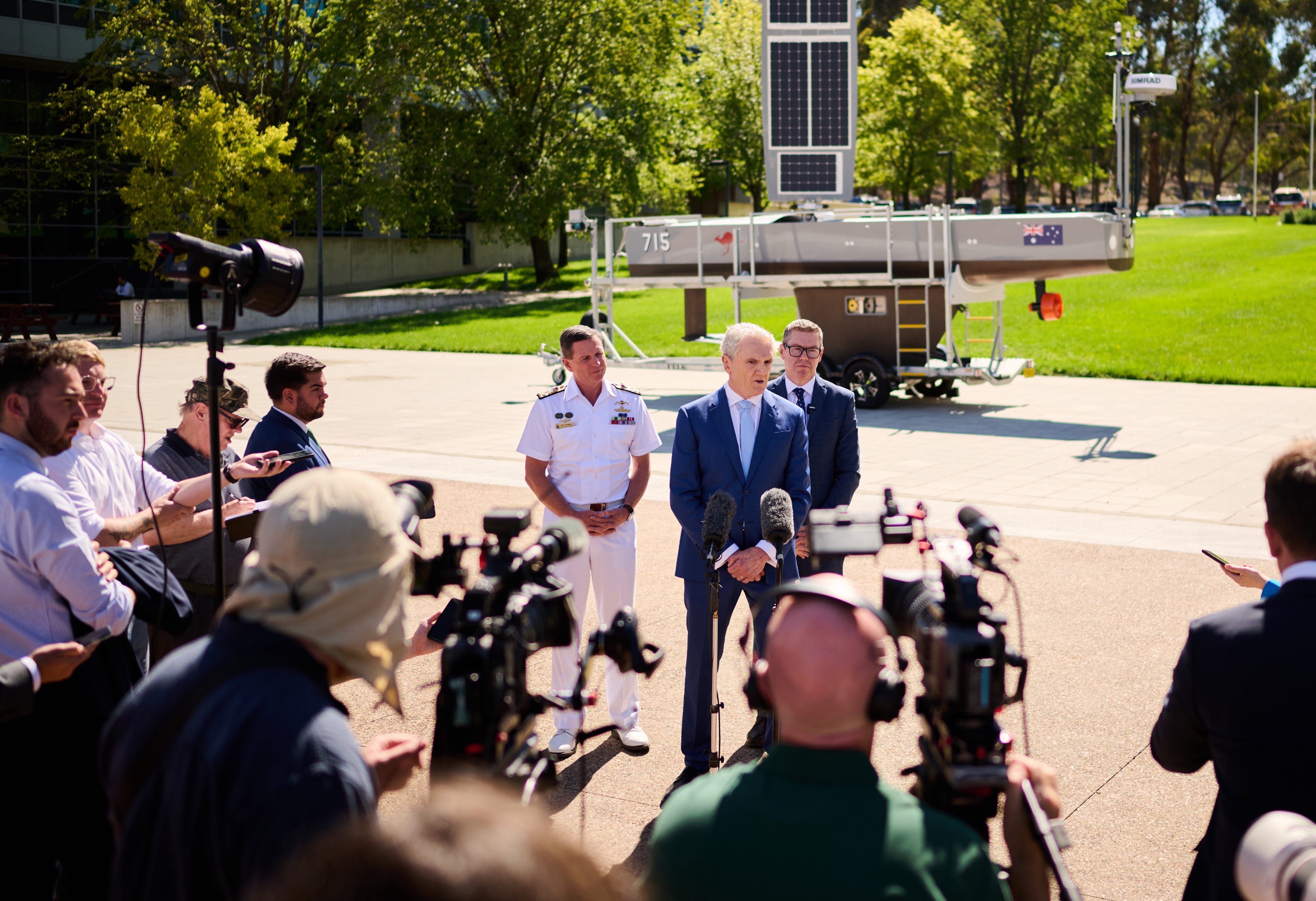
Nearly seven years later and in March 2026, the Australian government announced a $126 million contract to purchase 40 of the vessel, known as Bluebottle. During the press conference announcing the purchase, Robert Dane, CEO of the company behind the vessel Ocius Technology, highlighted the ongoing link between the world leading vessel and the sleepy fishing and tourist town in the Shoalhaven where those early trials were conducted.
“We have a very robust supply chain of companies from the Hunter to Western Sydney down to Ulladulla, including Adelaide and Darwin and Perth.”

While now based in Sydney, a spokesperson for Ocius confirmed to The Pulse that the company retains strong ties to the Illawarra-Shoalhaven region, where Dane, a former country doctor based in Ulladulla and passionate sailor, first began the business building solar-powered ferries.
“Now a leader in USVs, through the flagship ‘Bluebottle’ USV which is in-service with the Royal Australian Navy and Royal New Zealand Navy, Ocius still has links to the region, participating in tests and exercises out of HMAS Creswell in Jervis Bay and conducting operations off the coast of Eden,” the spokesperson said.
“This continues to this day, with a number of Ocius’ composite manufacturers and machinists being based in the Illawarra-Shoalhaven area, in addition to others around the country.”
As the Illawarra’s traditional industries retool to supply defence customers, and the Shoalhaven’s existing defence industry plays a greater role in national programs, will the story of Ocius be a one-off, or a sign of things to come?
The 10-year timeline
While acknowledging the scale of the March 2026 announcement, which Dane described as the largest purchase of this sort of vessel “in the world” to date, it was clear this didn’t happen overnight. In fact, it took 10 years of collaboration between Ocius and the Royal Australian Navy to get to this point.
Three years ago, the Illawarra set out its own 10-year defence horizon, publishing the Illawarra-Shoalhaven Regional Defence Industry Strategy.
Bianca Perry, CEO of i3Net, said the region had the ingredients needed for a significant defence industry, but had lacked the coordinated lobbying firepower of other defence-oriented industrial regions.
“I think we just get on with the work.”
At the time of the strategy’s release, the Illawarra was in the spotlight with Port Kembla on the Morrison government’s shortlist for a potential base for the future fleet of AUKUS nuclear submarines.
But after significant community push-back, the Albanese Labor government has talked down any imminent call on an east coast base, with the timeline for a decision pushed out to 2030 and beyond.

Meanwhile, three years into the 10-year strategy, “the world has changed a fair bit” notes Selena Stevens, CEO of RDA Illawarra-Shoalhaven, which has taken carriage of the strategy’s implementation.
So far, Stevens says, of the six strategic focus areas outlined in the KPMG-authored report, the region is already delivering on three, through greater industry coordination, stakeholder engagement and workforce development.
To prove this, there have been significant wins for the region. In early 2025, the Albanese government confirmed a $313.5 million contract for the servicing of the expanded Seahawk fleet, based at HMAS Albatross in Nowra.
In addition, BlueScope and Bisalloy will supply steel for the building of the AUKUS subs, with the first $15 million contract for testing and qualification signed in late 2023. At Bisalloy, this and other defence contracts are making up a “substantial contribution to earnings”, as chairman David Blakin noted in the company’s 2025 annual report.
“Looking ahead, we remain firmly focused on scaling our Protection plate business. With a trusted brand, world-class technical capabilities, and a global reputation for innovation, Bisalloy is well-positioned to meet growing demand driven by rising global tensions and security-related infrastructure investment.”
However, for other companies hoping for a similar boost, Perry sounds a note of caution.
“It’s about not putting all your eggs in the one basket, and making sure that if you have a technological solution, that it’s ‘dual-use’ technology.”
In addition, as AUKUS absorbs a growing proportion of the defence budget, spending on professional services firms has been cut back, as David Bridge, CEO of Bridge Project Solutions, points out.
“A lot of other defense capability programs have been cut, and there are a lot of job losses happening particularly in that consulting side.”
The blueprint
At the release of the updated 2026 national defence strategy and the integrated investment program in April, Defence Minister Richard Marles outlined an additional $14 billion for defence over the next four years.
For a portion of that to flow to the Illawarra-Shoalhaven, Stevens said it was time to “transform the way that defence engages with our region”.
“It’s about shifting from the Illawarra-Shoalhaven from being a nice to engage with to a must engage with.
“As a region, how can we talk as one?”
This pivot will engage the three strategic focus areas yet to be achieved: develop the region’s technology base, play a greater role in major defence acquisition programs and grow the number of prime contractors in the region.
However, Bridge highlighted, there is a playbook for how the Illawarra-Shoalhaven’s businesses can play a major role in defence, but it requires a coordinated effort.
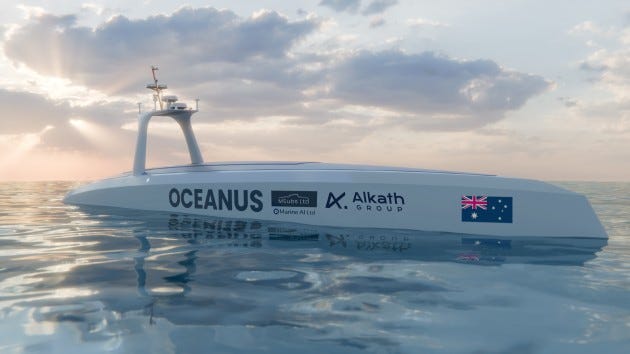
In July 2024, leading British unmanned underwater vessel manufacturer MSubs announced it was opening an Australian subsidiary, in partnership with Nowra-based Alkath Group. The announcement was the result of an all-hands push to make the Illawarra-Shoalhaven the location of choice for underwater drones.
“MSubs were, at the time, on a national endeavor to find where was the best place for them to announce an Australian operating point? And we ticked all the boxes,” Bridge, who at the time was chair of i3Net, said.
Replicating this model would lead to similar successes, uplifting local businesses and attracting international expertise and investment, Bridge said.
“We’ve got the blueprint for how it can work.”

If you refer your friends to The Pulse Illawarra, and they subscribe, you will receive complimentary access to our content. Find out how it works here.
The Illawarra is poised for transformation. Smart money and forward-thinking leaders are positioning for opportunities ahead.
We’re proud to introduce a special guest series by Connor Pearce, a respected former business journalist at The Illawarra Mercury, who examines five game-changing dynamics and unpacks the big economic questions.
You can read more from the Future Proof series as Connor Pearce examines the future - and the fault lines - across key sectors that will define the Illawarra over the next decade:
What lies beneath - Tahmoor closure exposes gaps in government plan for a post-coal Illawarra
It’s AI-generated with a fake author - the rise of one of Wollongong’s most searched websites
Closing the loop: Inside the movement building a circular economy in the Illawarra
Not business as usual: The new wave of Illawarra businesses combining profit and purpose
A new energy: Meet the creatives reshaping industry in Port Kembla
Go south-west: Can Picton Road and the SWIRL precinct unlock new corridors of growth?
Port Kembla’s energy future: Will gas, hydrogen or offshore wind win out—and who will decide?
The new care economy: With aged care and the NDIS under pressure, what comes next?
Cranes in the sky: Housing policy from the ground up—and why not everyone agrees.
The business of play: Tourism’s next act, and how to price the “experience economy.”