


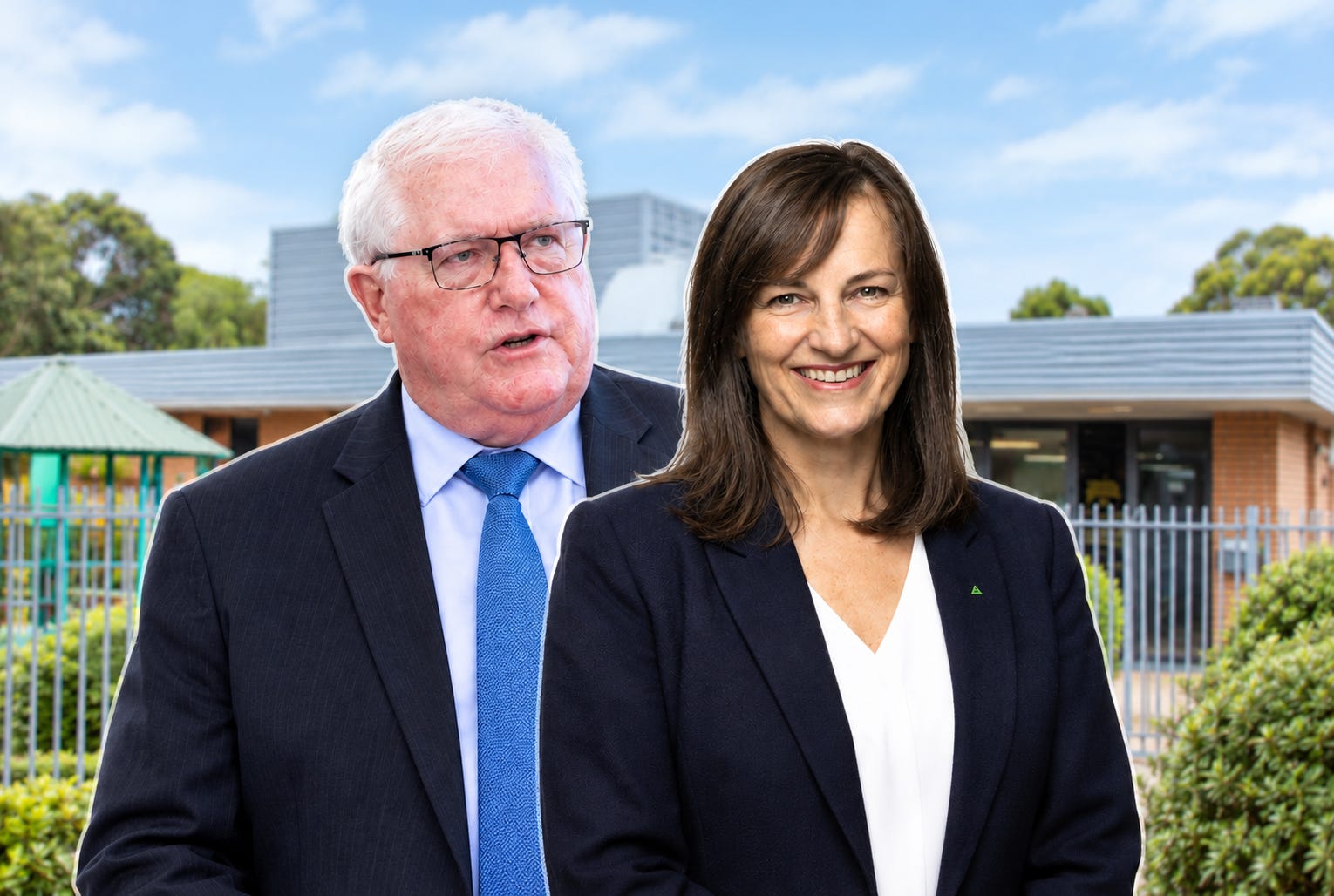
As a parliamentary committee questioned Plymouth Brethren Christian Church leader Bruce Hales and his son Gareth, the Illawarra’s role in the inquiry is worth revisiting.
The pair yesterday denied coordinating church members to volunteer during the 2025 federal election. But months before the hearings in Canberra, the Joint Standing Committee on Electoral Matters heard from witnesses in Berkeley about campaigning at polling booths across Whitlam.
The November 19, 2025, hearing was the committee’s second public hearing outside Canberra. Parramatta was its only other NSW stop.
Every witness who gave evidence in Berkeley was affiliated with the Australian Labor Party, including Whitlam MP Carol Berry, her campaign staff and volunteers. Their accounts focused on the conduct of Liberal-aligned campaigners, with Liberal deputy chair Senator Richard Colbeck among the committee questioning witnesses about their claims and the implications of possible reforms.
Witnesses described behaviour at polling booths in Dapto, Albion Park and Corbett Gardens in Bowral as beyond standard election campaigning. They reported large groups of unfamiliar young volunteers, some apparently “on leave from family-owned businesses”, along with chanting, blocked walkways, unauthorised signs and third-party flyers authorised under an obscure Melbourne name.
Berry, a former CEO of The Disability Trust, told the committee the campaign environment had been particularly difficult for some vulnerable voters: “What I saw during the 2025 federal election campaign was different to anything I’ve ever seen before in any election I’ve ever worked on.”
Berry described voters with sensory sensitivities recoiling from a crowded “sea of blue”. She also recounted intervening when a worker removed rival how-to-vote cards from an elderly voter experiencing cognitive decline, leaving the woman with only Liberal flyers. Berry acknowledged that many Liberal volunteers behaved appropriately, but said some campaigners had changed the atmosphere at polling booths.
“... it did feel like a gang of immature and hostile young men. I found out later that some of these workers were from the Exclusive Brethren,” she said.
Berry’s campaign manager, Ailis Quinn, said some volunteers had privately told her they were asked to attend by their church. Booth coordinator Alison Mansell described voters at the Dapto Ribbonwood Centre having to make their way through what she called a “tunnel of volunteers”.
The hearing also raised questions about whether religious groups that abstain from voting should be allowed to campaign at polling booths. Colbeck questioned the implications of preventing citizens from supporting political campaigns on the basis of their beliefs or voting practices.
Ross Hannah, a retired lawyer and long-time Labor figure, urged the committee to “leave the Plymouth Brethren alone”. He argued for transparency and public scrutiny, not bans.
Code of conduct
Witnesses also described the demands of a two-week prepoll period, a crowded 10-candidate ballot and the volume of corflute signs, which they said created pedestrian hazards and added pressure on local authorities.
Suggestions for reform included an enforceable Australian Electoral Commission code of conduct for volunteers, extending the six-metre exclusion zone around polling places, limiting corflute signs and reducing prepoll voting to one week.
The Berkeley hearing offered the committee a local account of the issues now under scrutiny nationally, from the conduct of campaign volunteers to the rules governing political activity around polling places.