


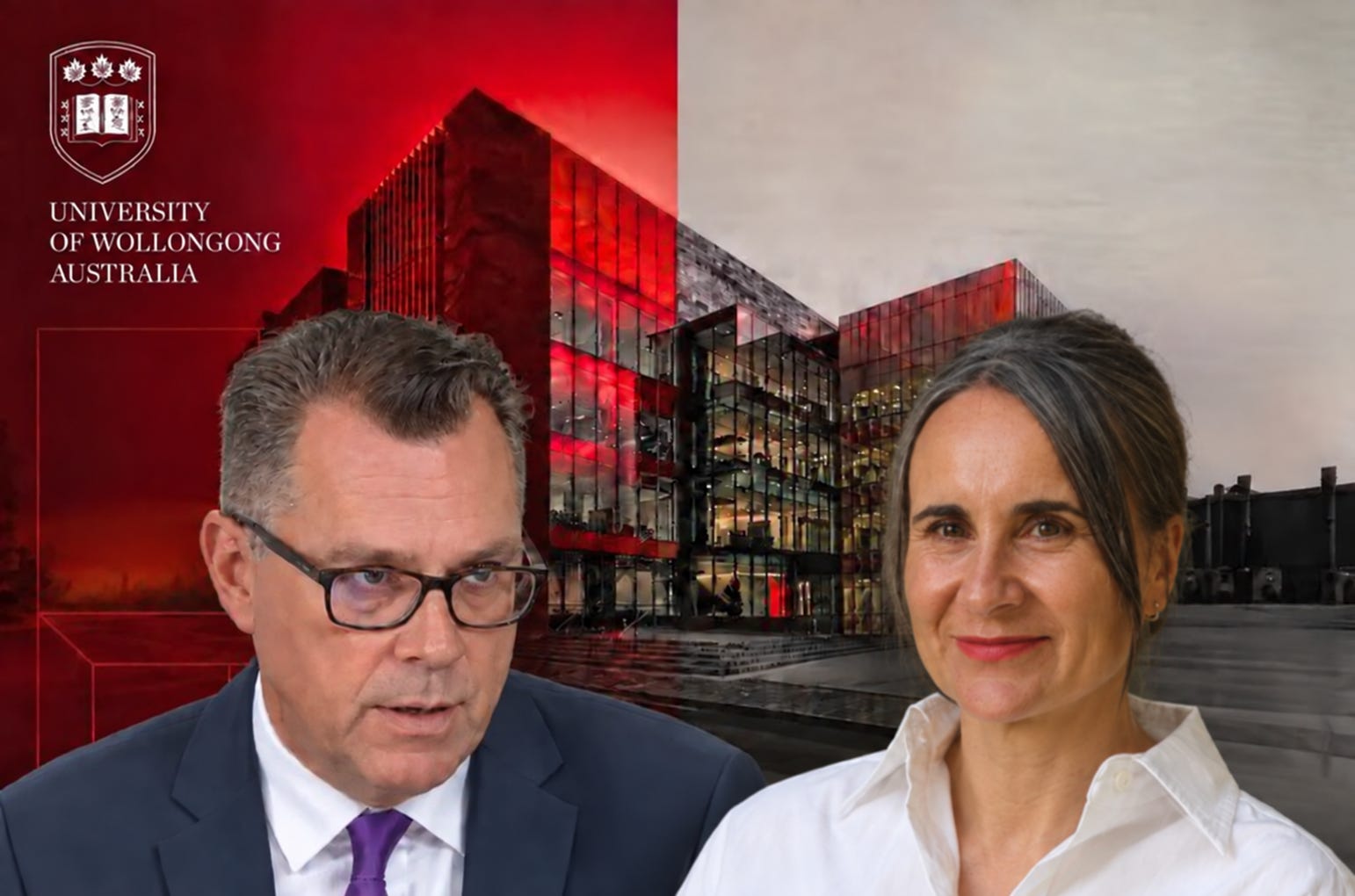
A former University of Wollongong interim vice-chancellor may have committed contempt of Parliament after “misleading” an inquiry about his financial ties to a consulting firm that secured $3.8 million in university work.
The conclusion against John Dewar appears in the final report of the NSW Legislative Council’s Standing Committee on Social Issues, published on Monday, September 21, after its inquiry into university governance.
The committee said discrepancies between Mr Dewar’s evidence to its inquiry and his later evidence and admissions to ICAC’s Operation Scandi were “highly significant”.
The finding is one of the conclusions in a 310-page report that declares governance across NSW universities “not fit for purpose” and calls for a comprehensive review of the laws governing every institution.
Mr Dewar was a KordaMentha partner when he became UOW’s interim vice-chancellor in June 2024. The firm went on to secure contracts worth $3.8 million from the university.
He initially told the parliamentary inquiry he had taken unpaid leave from KordaMentha, but later disclosed he had received a payment and retained an entitlement to profit distributions.
The report said he subsequently admitted at ICAC that he wanted his UOW appointment to benefit the firm, creating “if not actual then certainly perceived conflicts of interest”.
The committee described the discrepancies in his evidence as “highly significant” and a potential contempt of Parliament.
“It is also a very serious matter that Mr Dewar appears to have contravened his solemn undertaking to speak truthfully under oath,” the report said.
ICAC had not delivered its findings when the parliamentary committee finalised its report.
But the committee described UOW’s procurement practices as “cavalier”.
“The UOW example of a cavalier approach to consultant procurement raises very serious concerns as to practices across the sector,” it said.
The report recommends public registers of interests for university executives and council members, much greater disclosure of consultancy contracts and stronger oversight of how vice-chancellors and chancellors are appointed, assessed and removed.
It wants at least half of university councils to be made up of elected staff and student representatives, with council minutes and the reasons for major decisions made public.
Universities would also have to explain the financial case for restructures and show that consultation occurred before decisions were effectively settled.
The committee said NSW universities spent $139 million on consultants in 2025 and warned that overuse was weakening their internal capability and pushing them further towards corporate management.
Its interim report had already recommended the NSW Government compel UOW Council to report on the university’s commercial operations and related entities, including University of Wollongong Global Enterprises.
The recommendation is under consideration until the ICAC investigation is complete.
Chair of the committee, Dr Sarah Kaine MLC, said the inquiry had exposed systemic problems that can no longer be ignored.
“For years we have seen headlines exposing governance failures, controversial spending decisions, soaring executive salaries, overreliance on consultants, cuts to staff and worsening workplace culture. This inquiry confirms these are not isolated incidents. They are symptoms of deeper structural problems across the sector.”
“This report sets out what needs to change. The challenge now is ensuring these recommendations do not sit on a shelf. The future strength of our university sector depends on our willingness to act.”
Dr Kaine said the final report must be seen as the beginning of a reform agenda, not the end of an inquiry.
“What happens next matters. If governments and universities fail to act, we risk further erosion of trust in institutions that are fundamental to our state’s future.”
More reporting to follow.