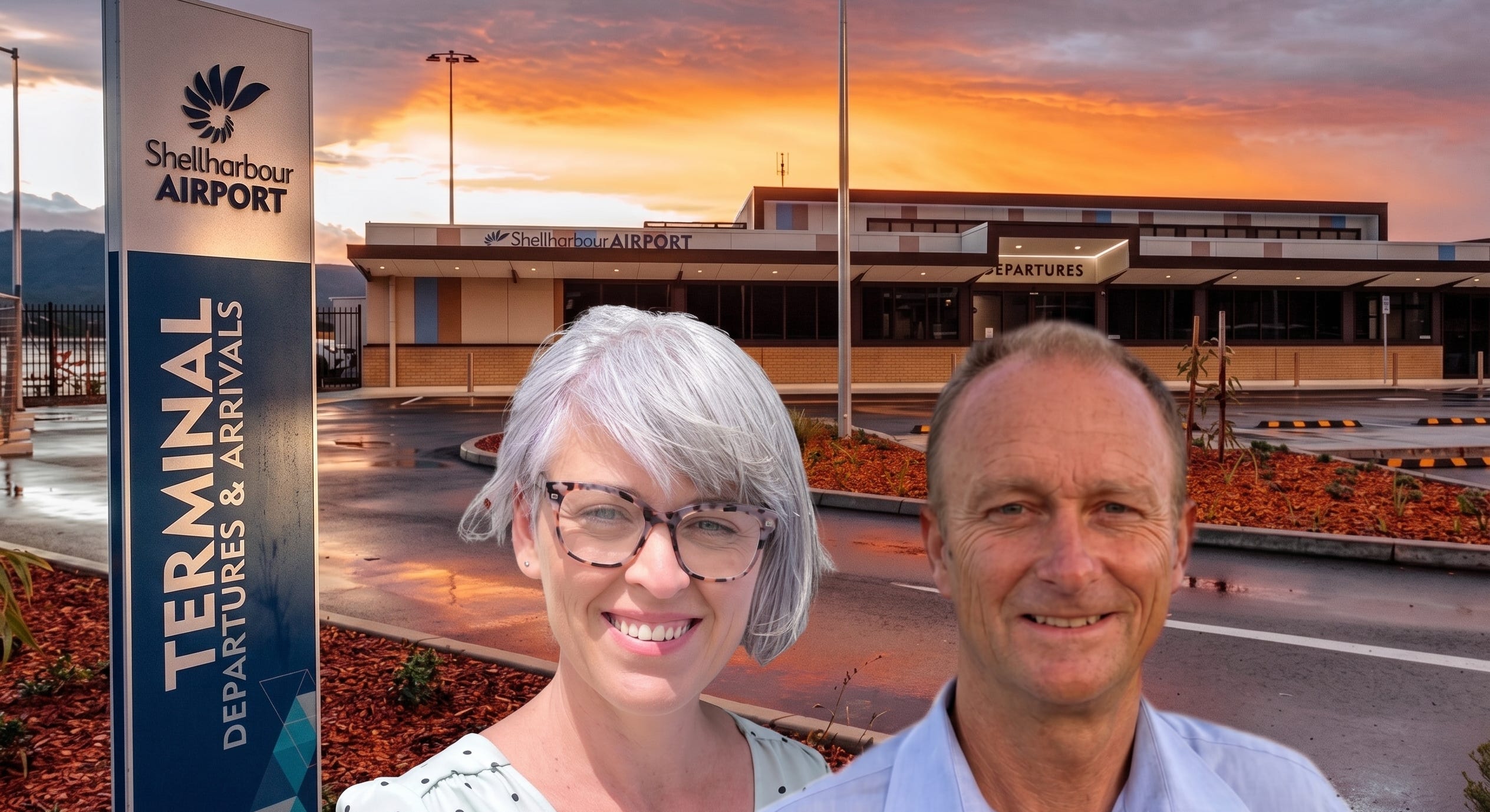
Grounded: The fight for Shellharbour Airport's future
What comes next for the Illawarra's air link?

Almost a month after the last passenger flight left Shellharbour Airport, the Illawarra remains without a commercial air service.
The loss of flights has reignited debate about the airport’s future and whether the Illawarra can sustain a commercial air link.
It is a very different picture from the one outlined in 2024.
Shellharbour City Council’s 2024 Airport Master Plan identified a catchment of around 483,000 people stretching from Helensburgh to Ulladulla and west to Moss Vale, and mapped out a future of expanded air services, new aviation businesses and increased tourism and employment opportunities.
Today, there are no commercial passenger flights.
Link Airways suspended its Shellharbour routes on May 20, citing rising costs and weak demand, leaving the region without scheduled passenger services for the first time in years.
While the airline has not ruled out a return, saying it will continue to monitor the market and “look to return to Wollongong when the demand recovers”, local business leaders say the airport’s current position highlights broader problems facing regional aviation.
The issue has been thrust back into the spotlight by a new Business NSW report, which argues rising costs, limited airline competition and funding settings are making it increasingly difficult for regional airports to attract and maintain services.
Business Illawarra Director Coralie McCarthy said the loss of flights had immediate consequences for the region.
“Our region has effectively lost its direct air connection overnight, and that has an immediate impact on businesses, tourism and broader economic activity,” Ms McCarthy said.
The report found regional air travellers were paying about 52 per cent more per kilometre than passengers travelling between capital cities, while 61 per cent of small regional airports operate at a loss.
Ms McCarthy said Shellharbour Airport’s challenges reflected issues being experienced across regional NSW.
“To expect the local ratepayers of Shellharbour LGA to foot the bill for this regionally significant asset is simply not a long-term plan,” she said.
A key issue identified in the report is the way Shellharbour Airport is treated for funding purposes. Business NSW argues the airport is considered metropolitan in some planning and funding frameworks, despite serving one of the state’s largest regional catchments.
“Shellharbour Airport is being treated like a metropolitan airport on paper but operates like a regional one in practice, and that is actively undermining the viability of a critical asset for our region,” Ms McCarthy said.
Shellharbour City Mayor Chris Homer said the airport’s future would depend on access to funding.
“Stronger integration and fairer access to funding will help unlock the airport’s potential and support the region’s growth, connectivity and essential services,” Cr Homer said.
Business NSW is calling for a 10-year aviation strategy, a dedicated infrastructure fund and improved service reliability, arguing that regional airports remain critical to economic growth, emergency response and connectivity across the state.
It’s that time of the year: EOFY sale time.
Yes, you can save money with us, too.