

Ideas, trust and climate collide at sold-out TEDxWollongong debut
Big ideas land on city stage

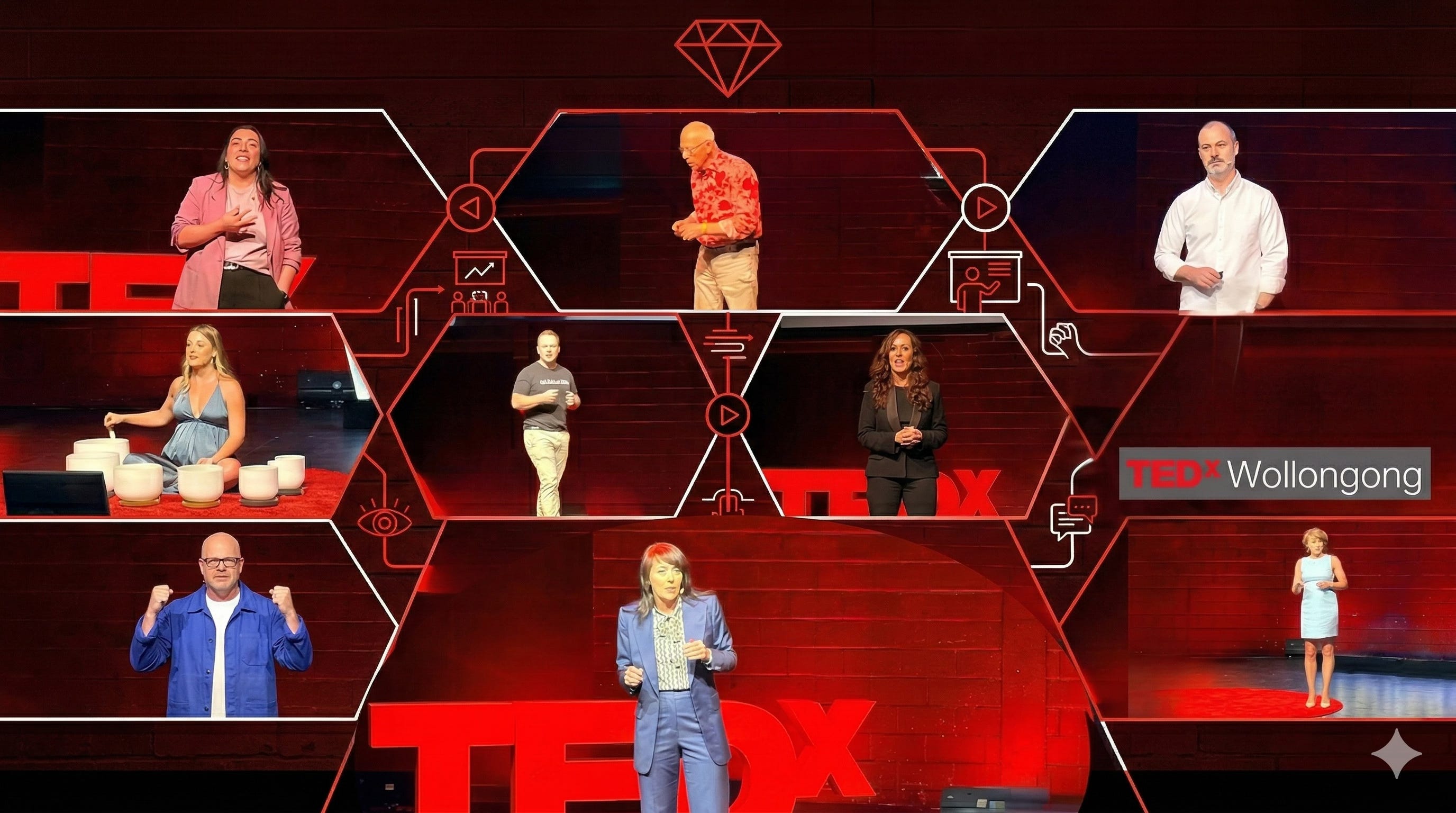
Among the thousands of words delivered at Saturday’s inaugural TedxWollongong event, it could have been ethereal vocalist Isobel Bee who best summed up the three hours: “May you enjoy this shift in state.”
Her contribution to the curated program was unique. Who ever expected to experience live vocal resonance with sound meditation in IPAC’s Bruce Gordon Theatre on a Saturday afternoon, as a thunderstorm raged outside?
But Bee wasn’t the only one challenging assumptions. Across three hours, four distinct threads emerged — our bodies, our trust, our planet, and each other.
On health, orthopaedic surgeon Dr Meghan Dares reframed pain as a warning signal we’ve been trained to ignore, while physiotherapist Kylie Moffitt made the case for exercise as medicine - underused, undervalued, and overdue for a rethink. Sun&Co founder Nuwangi Cooray extended that into the everyday, dismantling the comfortable fiction that Australians understand UV exposure. Most of us, she argued, don’t come close.
Trust ran as a quieter undercurrent. Clinical psychology lecturer Dr Emanuela Brisadelli explored how our life experiences shape our capacity for it — are you Team Mad Max, slow to extend trust, or Team Little Red Riding Hood, quick to offer it? Either way, she said, trust is a muscle that can be trained.
While counsellor Carlie Schofield invited the audience to examine how they frame trauma — not as something that happened to them, but as something that can be worked with.
From AI to fossil fuel
The third thread was the planet. Sustainability strategist John Pabon set the frame early, offering three pointed questions for cutting through - does a claim acknowledge reality, does it account for existing communities, and is progress actually measurable? It was a practical toolkit, and two speakers ran with it.
Senior research scientist at Sicona, Dr Greg Ryder, brought it close to home: the intersection of advanced materials and environmental responsibility is being worked out right now, in Wollongong. Dr Karl Kruszelnicki took the wider view, arguing that reversing climate change doesn’t require new technology, only the political will to redirect the vast subsidies currently flowing to fossil fuel companies toward solar and zero emissions. He arrived with graphs and he mentioned offshore windfarms.
The darker side of trust belonged to former detective-turned-scambuster Kylee Dennis. Where Brisadelli examined how we extend trust, Dennis showed how romance scammers systematically exploit it, using coercive control to devastating effect. The shame surrounding these scams, she argued, creates a silence that protects predators. Her message was unambiguous: stop whispering and start talking.
The fourth thread - each other - was quietly powerful. Talk2mebro co-founder Jack Brown posed a deceptively simple challenge. When you ask someone how they’re going, do you actually listen to the answer? His three-step response was disarmingly practical: ask again and mean it, listen without feeling compelled to fix anything, and don’t rush the silence.
‘It’s happening’
UOW Vice-Chancellor Professor Max Lu opened the day by recognising Wollongong as a city simultaneously proud of its heritage and actively writing its own future. It was a generous framing, and the event bore it out. Pabon said it plainly: “The development, the changes, the evolutions that we so desperately need, they’re happening as we speak all around the world, including here in Wollongong.”
That was confirmed in action when teenage members of Project Bucephalus took the stage, demonstrating remarkable robotic skills alongside a message of inclusion that was among the day’s most inspiring moments.
The first TedxWollongong sold out well before a word was spoken. With a 2027 iteration already signalled, the 515-seat IMB Theatre may soon feel like the natural next home.
Ditch the noise. Find the signal.
The Pulse Illawarra delivers high-yield intelligence for the Illawarra’s business and academic leaders. Read about the people, projects and policies shaping the region’s next decade.