


A proposed Illawarra food hub that could help tackle food insecurity is on hold for lack of funding, despite a 2024 survey finding that more than a third of households surveyed had experienced it.
Healthy Cities Australia chief executive Kelly Andrews says rising food and fuel costs are pushing more people to seek help for the first time, including middle-income families.
“With the cost of living, food and fuel prices, there are more food-insecure people now than ever before,” Andrews said.
“The interesting thing is, they’re not the traditional lower socio-economic audience anymore. It’s lifted to the middle class, with people seeking help for the first time.”
Many community organisations providing food relief are not funded to do that work, Andrews said. They rely on volunteers and donations, and spend time sorting, packing and redistributing food — work that draws resources away from their frontline services. Some cannot take more food because they lack storage, refrigerated transport or enough volunteers to move it.
Healthy Cities Australia proposes a shared warehouse with cold storage and equipment to sort and pack food. An initial pilot could serve about 10 organisations.
The organisation has spent the past year consulting more than 50 stakeholders and preparing a feasibility study and business case. It says 84 per cent of those consulted support the proposal. OzHarvest and SecondBite are among its founding partners.
But Healthy Cities Australia has not secured any of the almost $3 million in grants it has applied for. Funding for the project manager’s scoping work has run out, and the organisation has yet to find a site.
Andrews estimates it would take about $1.5 million to launch the hub for its first year, with further funding needed to keep it running.
She points to Victoria, where about five regional food hubs have operated for 15 years or more, supported by state and local government funding, philanthropy and grants.
“In practice it works really well in Victoria,” she said. NSW has no equivalent regional hub network.
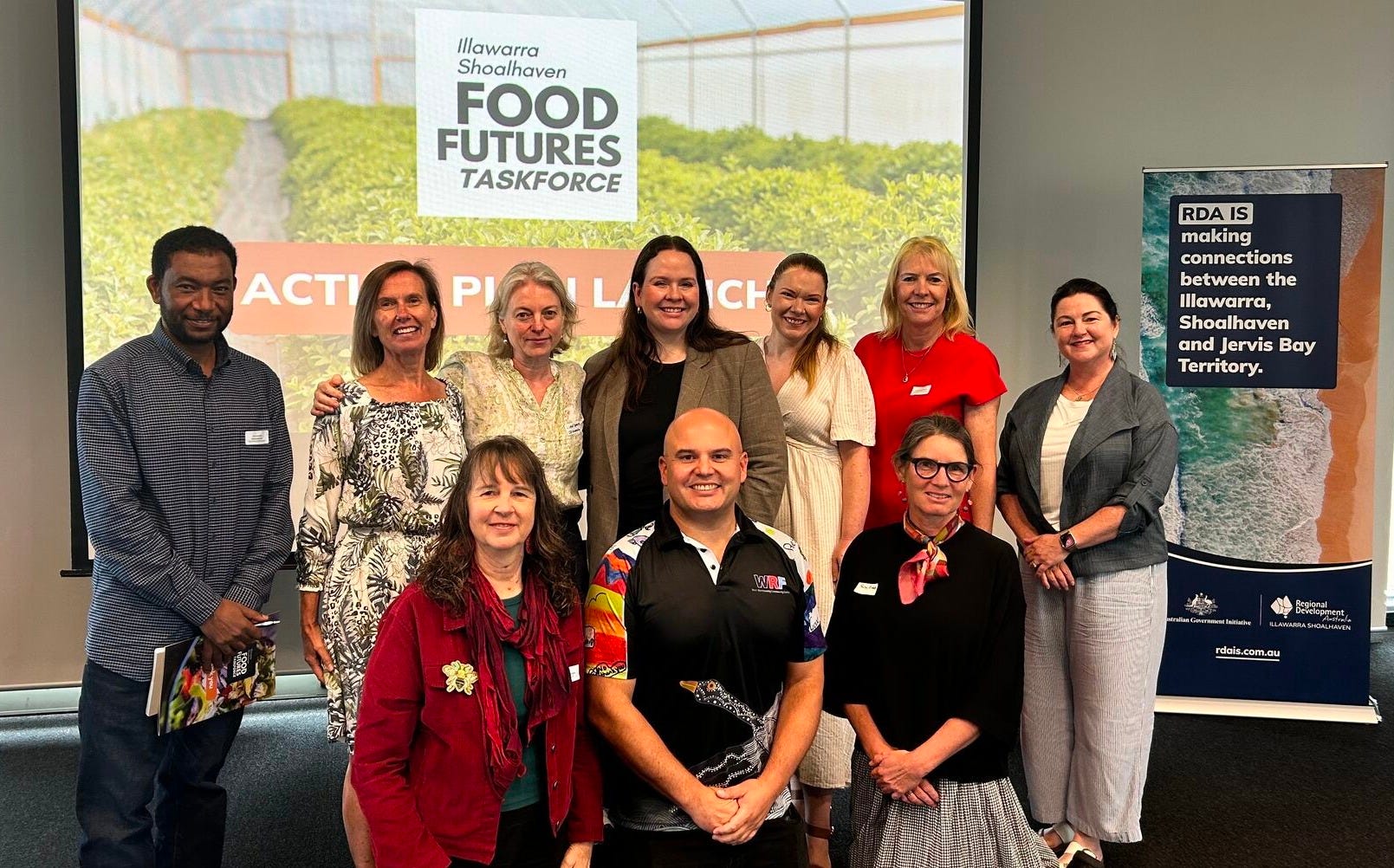
The funding search comes as RDA Illawarra Shoalhaven Food Futures Taskforce sets out a wider response. Its new 2027–30 Action Plan follows the 2024 University of Wollongong survey and makes food access and food rescue regional priorities.
The plan calls for mapping gaps, connecting food hubs with donors and partners, and trialling shared use of transport systems. It also calls for sustained investment in the infrastructure and community organisations delivering food relief.
Healthy Cities Australia is part of the taskforce and will report on the hub’s progress. RDA Illawarra Shoalhaven chief executive Selena Stevens said a hub was one possible way to improve food access, alongside better pathways for local producers, food education and potential healthy school meals.
“Access to food is something that is incredibly important as an outcome within the action plan. We believe that can be achieved not only through a hub, but also other areas, including better pathways for local food producers to sell their products,” Stevens said.
“The plan isn’t aiming to take big chunks out of the issue. It’s about identifying small, tangible steps we can work on together,” Stevens said.
The taskforce will establish working groups to turn its six focus areas into operational plans. Suzy Pickles, director of Saltbush Projects, will join RDA in the new year as project manager for that work.
Andrews said the taskforce creates a regional platform to make the case for a shared solution. But the plan does not fund or formally commit to the hub. The proposal still needs a site, sustained investment and organisations and governments willing to back it.
“Not any one organisation alone is going to be able to pull this off,” Andrews said.