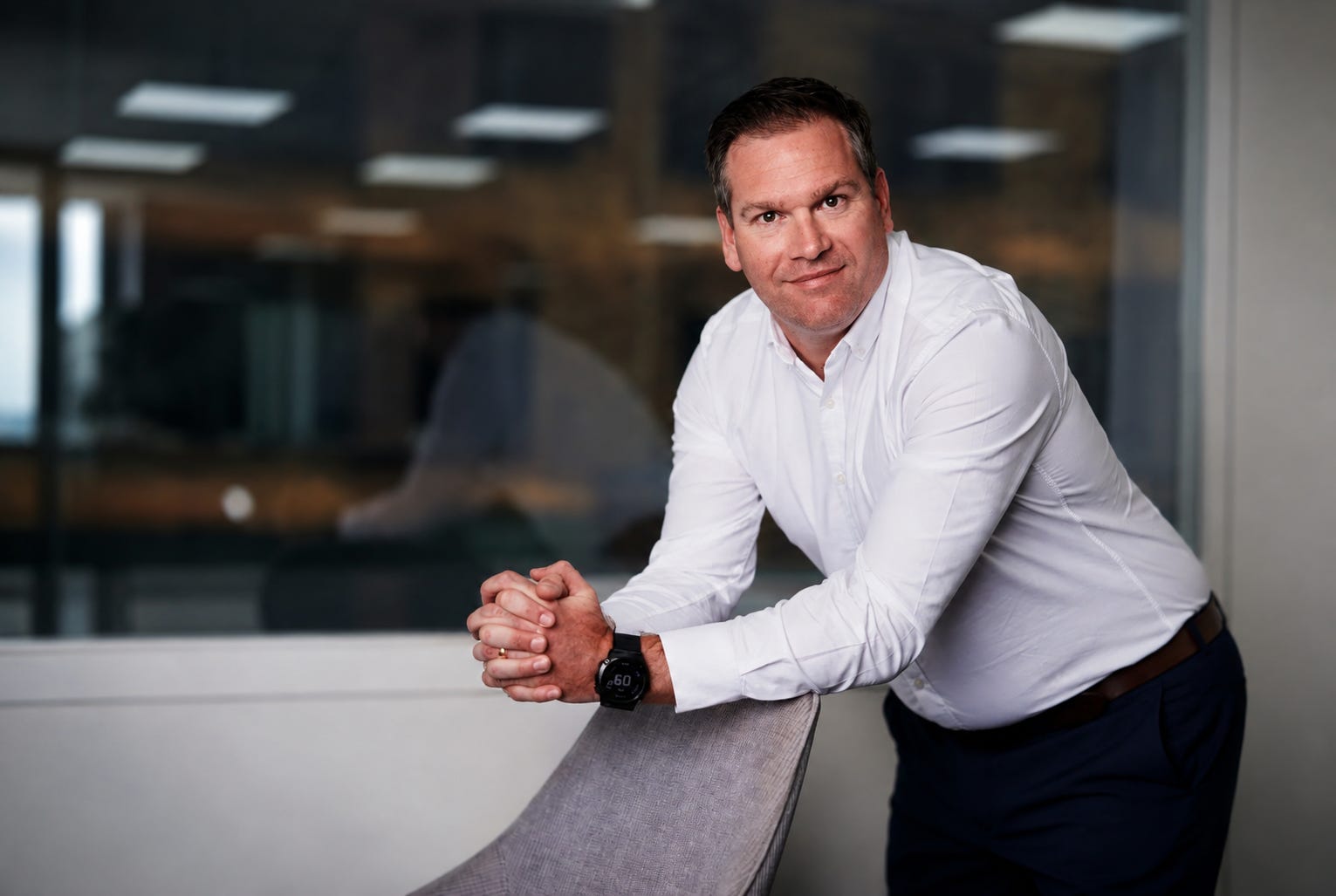
A few years ago, Paul Mitchell thought MitchCap might end up on the ASX. Today, the founder and CEO of the Wollongong-based finance business is glad it didn’t.
His concern wasn’t with listing. It was with being locked into one sector of the finance industry rather than the broader eco-system he’s since built.
“Once you’re listed, your ability to innovate inside your core reduces,” Mitchell said.
When MitchCap started in 2019, the business was straightforward: floorplan and distribution finance for manufacturers and dealers in caravans, marine and motorcycles. A manufacturer sells equipment to a dealer; rather than the dealer tying up its own cash buying stock, MitchCap pays the manufacturer and finances the inventory until it sells.
“We plug that gap on everything outside of autos,” Mitchell explained.
The business has grown beyond that model. Mitchell says MitchCap now funds around $100 million of equipment a month across roughly 850 dealers and more than 100 manufacturers and distributors nationally, mostly in sectors the major banks have stepped away from. But there’s more than floorplan finance.
Building an ecosystem
Not listing has allowed Mitchell to evolve his company’s offerings. Long-term investment from Balmain Capital and Macquarie Bank required neither a listing nor a liquidity event, and gave Mitchell something he considered more valuable than a public-market valuation: time.
That in turn gave him room to expand instead of consolidate.
“The impact MitchCap can have as a private business is significantly greater,” he said, adding a public listing would have left him unable to “scratch my entrepreneurial itch” the way he wanted.
MitchCap has since added vendor finance, a dealer-facing marketplace and lead-generation platform, retail finance and data tools for dealers. The next step is more ambitious: financing the businesses themselves.
Mitchell wants to move into commercial real estate finance, helping dealers buy the land they operate on rather than lease it. He believes around 90 per cent of dealers in MitchCap’s core industries lease their sites. As a specialist lender, he said, MitchCap can assess a dealership’s ability to buy its own site in a way “a bank can’t do.”
Having started financing inventory on the dealership floor, MitchCap is moving to finance the infrastructure, customers and ownership structures, too.
That growth has a South Coast case study attached. Nowra, long considered a major caravan retail hub, is home to numerous MitchCap customers, including JV Caravans, New Age, Crusader, Royal Flair and On the Move. Mitchell puts the growth down to the availability of land large enough for equipment-format dealerships to be affordable in a way that no longer exists in Wollongong. Dealers “cluster together” once a hub forms, he said, and draw buyers from across the Illawarra.
He also attributes the dearth of land to an issue recently raised at Wollongong City Council. On-street caravan parking might be inconvenient for some but, Mitchell argues, storage costs would definitely limit caravan ownership in the city . But that’s a whole different story!
Financing the next generation
MitchCap’s same problem-solving approach is being applied to succession, long regarded as one of the biggest pressures on family-owned dealerships.
Take caravan and camper manufacturer Cub, a client that has “been around for three generations”. A growing part of the company’s strategy, Mitchell said, is helping ageing dealer principals transition their businesses to the next generation.
“But the next generation doesn’t have the property,” he said.
So MitchCap is developing acquisition finance for those buyers, alongside tools to help retiring dealer principals value their businesses ahead of sale. The product would sit alongside, not separate from, the broader push into commercial real estate.
Made in Wollongong
Mitchell, proud of his Aussie-centric business, employs 45 staff in Wollongong, with roughly half graduates of the University of Wollongong and three current interns gaining real-world experience while they study. The company has formalised its UOW relationship through graduate programs, careers events and industry panels.
Mitchell believes the pool of finance and technology graduates coming out of UOW to be an “under-recognised regional asset” alongside the Illawarra’s more established manufacturing and energy credentials. There’s also the none-too-small matter of investing in the Illawarra.
“To be able to employ so many UOW graduates in a fintech and capital intensive business like this, says a lot about the expertise here,” Mitchell said. “That’s why I’m part of Business Illawarra as well - because I really want to have an impact on growing the commercial opportunities for people to start businesses in Wollongong in areas like technology and financial services.”


