Scully maps Illawarra-led economic arc from coast through Western Sydney to Hunter
Growth shift starts in our backyard
Planning Minister and Wollongong MP Paul Scully has outlined New South Wales’ next major growth corridor, and it begins here in the Illawarra.
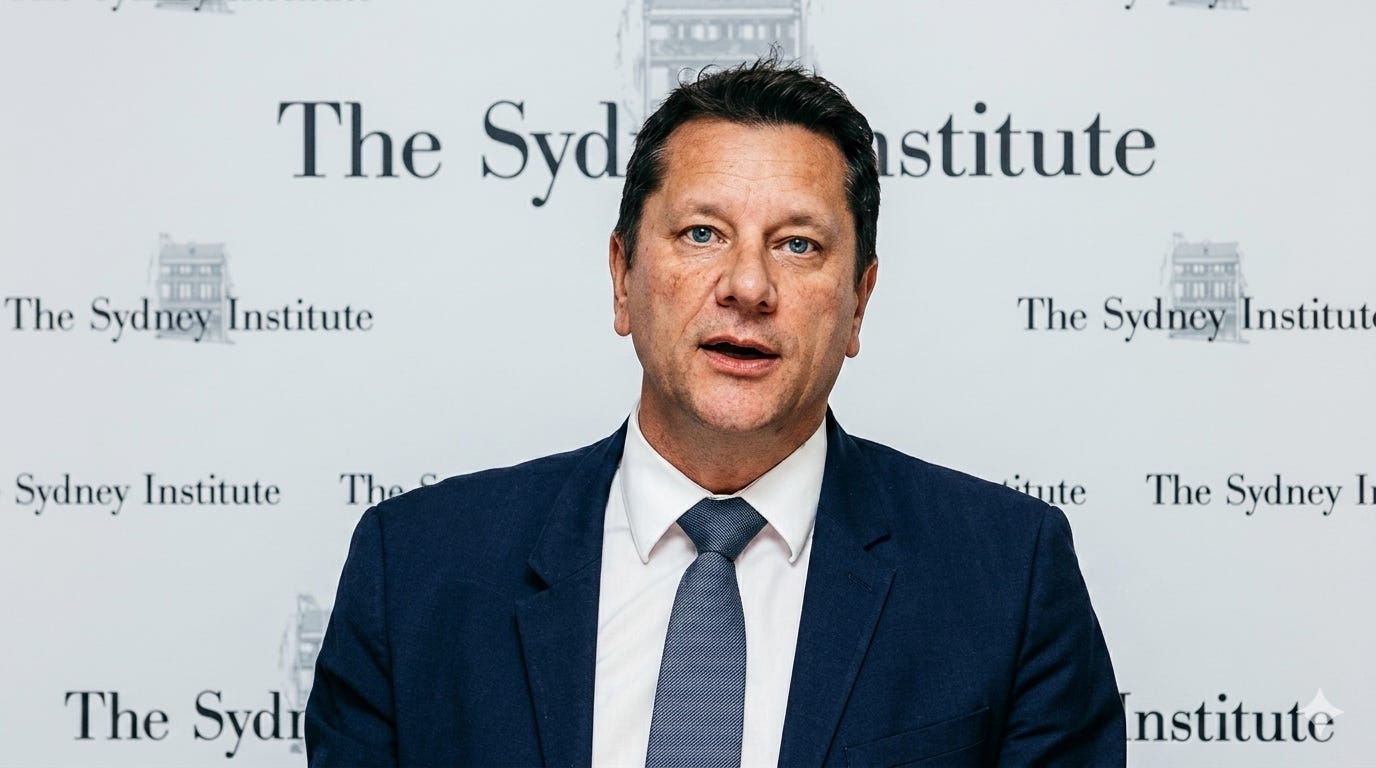
Speaking to a room of thought leaders at The Sydney Institute, Scully declared the region the foundation of a state-defining economic shift that will bypass the traditional Sydney CBD-centric model. Following his formal address, the Minister engaged in a lively Q&A session covering planning reforms, heritage, and infrastructure.
“When you look at the next sort of arc, it’s probably going to run from the Illawarra - and I say start there because I’m a bit biased - through Western Sydney around the airport around Bradfield and up into the Hunter, because that’s that arc that’s going to be so important,” Scully revealed.
Bradfield City, located in the Western Sydney Aerotropolis, is next to the new Western Sydney International Airport. It is Australia’s newest city and is designed to drive industry innovation and serve as a central hub for arts, culture, and entertainment.
Central to this economic arc is the state-led rezoning of 200 hectares of surplus BlueScope steelmaking land. Scully highlighted the strategic advantage of fast-tracking this precinct, noting the site already boasts a “six-lane freeway through it” and “four train stations along it”.
While existing steelmaking will continue, the Minister emphasised the unprecedented scale of the opportunity, stating the “potential of that site is for 20,000 jobs over the coming years”. The government envisions this land as a hub for “advanced manufacturing renewable energy and all sorts of other jobs that might come along”.
For local developers, Scully confirmed the dismantling of the previous “ad hoc patchwork” of local council levies. In its place is an “integrated system of infrastructure contributions stretching from the Illawarra to the Hunter”.
Crucially for the property sector, this uniform scheme is matched with a works-in-kind arrangement. This gives developers the flexibility to “undertake the work or dedicate land or pay a cash contribution associated with a comprehensive list of projects that will be updated annually,” providing much-needed financial certainty.
A workforce and opportunities
This macro-economic vision explains the strategic rationale behind targeting the Illawarra for the state’s Transport Oriented Development (TOD) and mid-rise housing reforms. Scully noted the region is attracting major Housing Delivery Authority proposals “because there’s a workforce, there’s job opportunities, there’s people who are willing to invest”.
To support this increased density, Scully revealed a targeted pivot in how the state funds local civic infrastructure. Addressing concerns about strained local amenities, he noted the state is shifting away from acquiring new land. For instance, Wollongong council has been encouraged to focus on the “intensity of use” for existing sports facilities.
The government’s priorities for sporting infrastructure grants in Wollongong, he said, are “drainage and irrigation so you can get the fields playing again more quickly, lighting so that you can use them longer”, and improved change rooms.
With rezoning of the BlueScope land underway, a uniform contributions framework being rolled out, and housing density targets active across the region, the Illawarra’s transformation from the arc’s starting point to its centrepiece is underway.
The Pulse Illawarra is focused on quality over quantity, providing in-depth analysis of the Illawarra’s growth phase - from the decarbonisation of Port Kembla to the commercialisation of UOW’s world-class research and beyond.


