


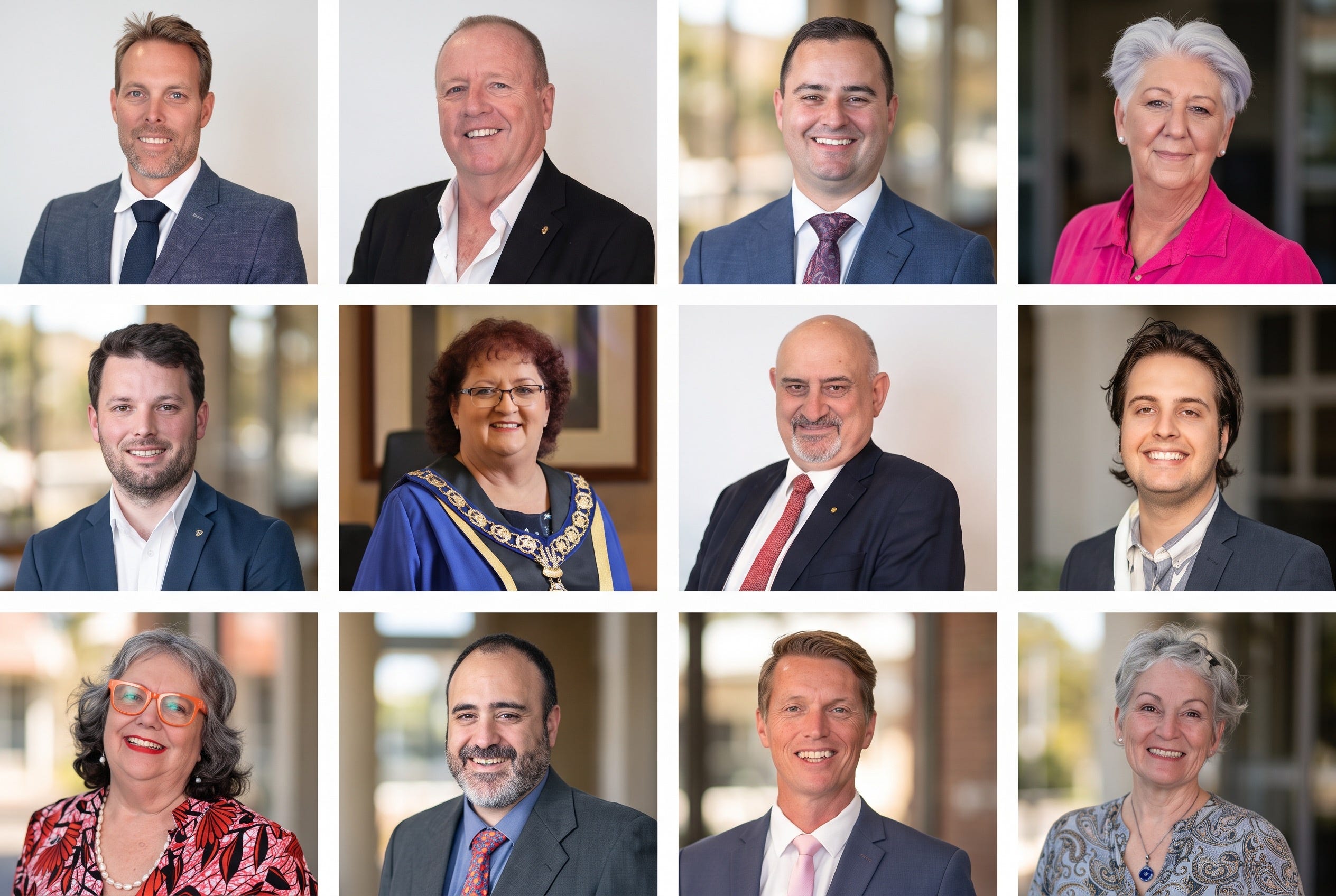
The NSW Local Government Grants Commission’s draft funding overhaul has left Wollongong City Council facing a $16.1 million annual funding shock.
The proposed changes would wipe out 67.5 per cent of Wollongong’s untied Commonwealth revenue, with its Financial Assistance Grants falling from $23.8 million to $7.7 million a year from July 2027.
At an extraordinary council meeting, councillors rejected the proposed model, which Lord Mayor Tania Brown has previously described as a “kick in the teeth” and an “unfathomable blow” to the Illawarra’s economic engine room.
The Commission’s balanced-budget methodology relies heavily on household income and land values as measures of a council’s capacity to raise revenue.
But councillors, minus the Cr Jess Whittaker, argued the formula fails to account for Wollongong’s role as a regional capital, where the population effectively swells to 287,000 each day. That includes 121,000 commuters, workers and students coming into the city, according to Cr Thomas Quinn, who said Wollongong “grows by about 30 per cent every day”.
Those people use the city’s health precincts, tertiary hubs, 17 patrolled beaches and heavy freight corridors, including infrastructure that serves neighbouring shires.
There was also concern that shifting funding from Wollongong to remote councils would simply redistribute an inadequate pool of money.
‘Garbage’
Cr Kit Docker argued it would do little to address the broader problem of underfunding, while Cr Deidre Stuart questioned the assumptions behind the modelling, saying an approach that oversimplified complex financial modelling produced “garbage which doesn’t reflect reality at all”.
The political argument was sharper still, with Cr Ryan Morris accusing the state’s Labor government of penalising one of its safest seats to benefit more marginal electorates.
The proposed cut comes on top of the usual financial pressure on Wollongong City Council and as Cr Richard Martin warned, councillors were facing a $32 million funding cut across the budget period before the next election.
Replacing the lost grant revenue would mean a rate rise of about 10 per cent, or cuts to services, according to Deputy Lord Mayor David Brown.
The role of the NSW Government also became a point of contention during the meeting after Cr Ryan Morris argued the state's Labor government was penalising one of its safest seats to benefit more marginal electorates.
Cr Ann Martin and Cr Thomas Quinn stressed the Grants Commission is independent of government, while its chair noted the recommendation had yet to reach the minister.
Cr Richard Martin defended that independence but said such a severe reduction would mean the council would have to revise its budget and “perhaps force cut projects, some of which are given the essential age of our local infrastructure would be a disaster”.
Cr Linda Campbell took aim at the broader funding system, warning against leaving councils “squabbling over crumbs” when the real problem was the size of the Commonwealth funding pool.
The council’s submission notes that Financial Assistance Grants have fallen from about 1 per cent of Commonwealth taxation revenue in the mid-1990s to “around 0.5 per cent”. The potential consequences are plain to see the councillors explained - Cr Andrew Anthony specifically.
He warned of unrepaired potholes, closed facilities, reduced pool hours and lost apprenticeships if the funding changes go ahead.
Council will lodge its formal submission ahead of the October 9 deadline. The Grants Commission will review feedback through November before finalising its funding formula.