UOW to host major $72 million research hub driving clean-fuel technology
Illawarra strengthens its research footprint as UOW leads flagship centre for clean-energy innovation.
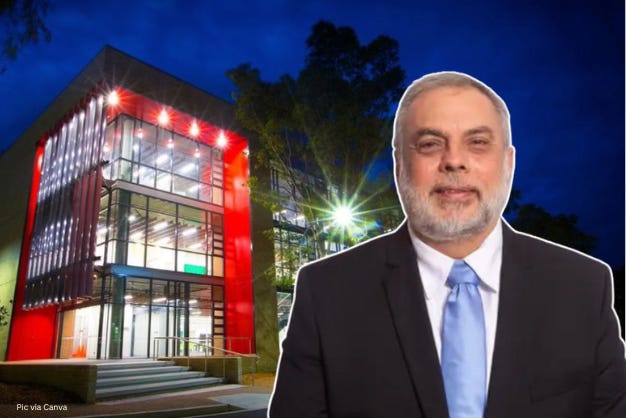
Distinguished Professor Gerry Swiegers will head up the centre of excellence. Pics supplied
The University of Wollongong will lead a new national research effort to lead Australia’s transition to clean energy, after securing one of eight Australian Research Council (ARC) Centres of Excellence announced this week.
The $72 million ARC Centre of Excellence for Renewable Fuels will be based at the Wollongong uni and bring together large, multi-institution teams for long-term research programs considered critical to Australia’s economic and social resilience.
UOW’s centre will focus on developing next-generation renewable fuels including green hydrogen, ammonia and methanol, positioning the Illawarra as a hub in an emerging global market. Distinguished Professor Gerry Swiegers will lead a consortium of seven universities and more than a dozen industry and international partners, working on production technologies, fuel processing and the regulatory frameworks needed for commercial adoption.
“Our vision is to make Australia a world leader in renewable fuels, driving our transition from a major exporter of fossil fuels to the world’s leading exporter of renewable energy,” Professor Swiegers said. “This centre will deliver the technologies needed to achieve that while training a new generation of researchers and engineers.”
The renewable fuels centre is expected to play a role in decarbonising hard-to-electrify sectors such as aviation, shipping and heavy industry. It will also help expand Australia’s capacity to export clean-energy technologies, an ambition tied to new industrial and workforce opportunities, the professor said.
With the centre set to begin operations in 2026, UOW and its partners will now move to finalise agreements and establish the first phase of research activity, including plans for early demonstrator projects aligned with industry needs.
The ARC has pitched the $279m federal investment as a way to strengthen national research depth while encouraging collaboration with industry and government. ARC Chief Executive Professor Ute Roessner said the program aims to bring diverse expertise to “the complex challenges of our time” and ensure research contributes to “a more resilient and prosperous Australia”.
The eight centres of excellence
The ARC Centres of Excellence awarded funding to commence in 2026 are:
ARC Centre of Excellence for Renewable Fuels (University of Wollongong): Innovating next-generation renewable fuels such as green hydrogen and ammonia, helping Australia become a global leader in clean energy exports.
ARC Centre of Excellence for Our Future Oceans (UNSW): Understanding and managing the changing oceans to support marine ecosystems, coastal communities, and a thriving blue economy.
ARC Centre of Excellence for Quantum Computer Performance and Integration (UNSW): Overcoming scientific barriers to scalable, reliable quantum computers and unlocking the full potential of quantum technologies.
ARC Centre of Excellence for Advanced Peptide and Protein Engineering (CAPE) (University of Sydney): Transforming the engineering of peptides and proteins for human and planetary benefit, leveraging artificial intelligence and automation.
ARC Centre of Excellence in Mathematics for Quantum Era Security and Trust (MathQuEST) (University of Sydney): Building expertise to secure Australia’s digital future in the age of quantum computing and artificial intelligence.
ARC Centre of Excellence for Transforming Human Origins Research (Griffith University): Mobilising Indigenous, Global South, and Western expertise to revolutionise our understanding of human evolution and adaptation.
ARC Centre of Excellence for Prisoner Reintegration (Flinders University): Developing evidence-based, culturally informed strategies to improve outcomes for people exiting prison and strengthen community wellbeing.
ARC Centre of Excellence for Quality Work in a Digital Age (QWiDA) (Curtin University): Designing technology and work systems to create healthy, inclusive, and productive employment opportunities in the face of rapid digital transformation.


