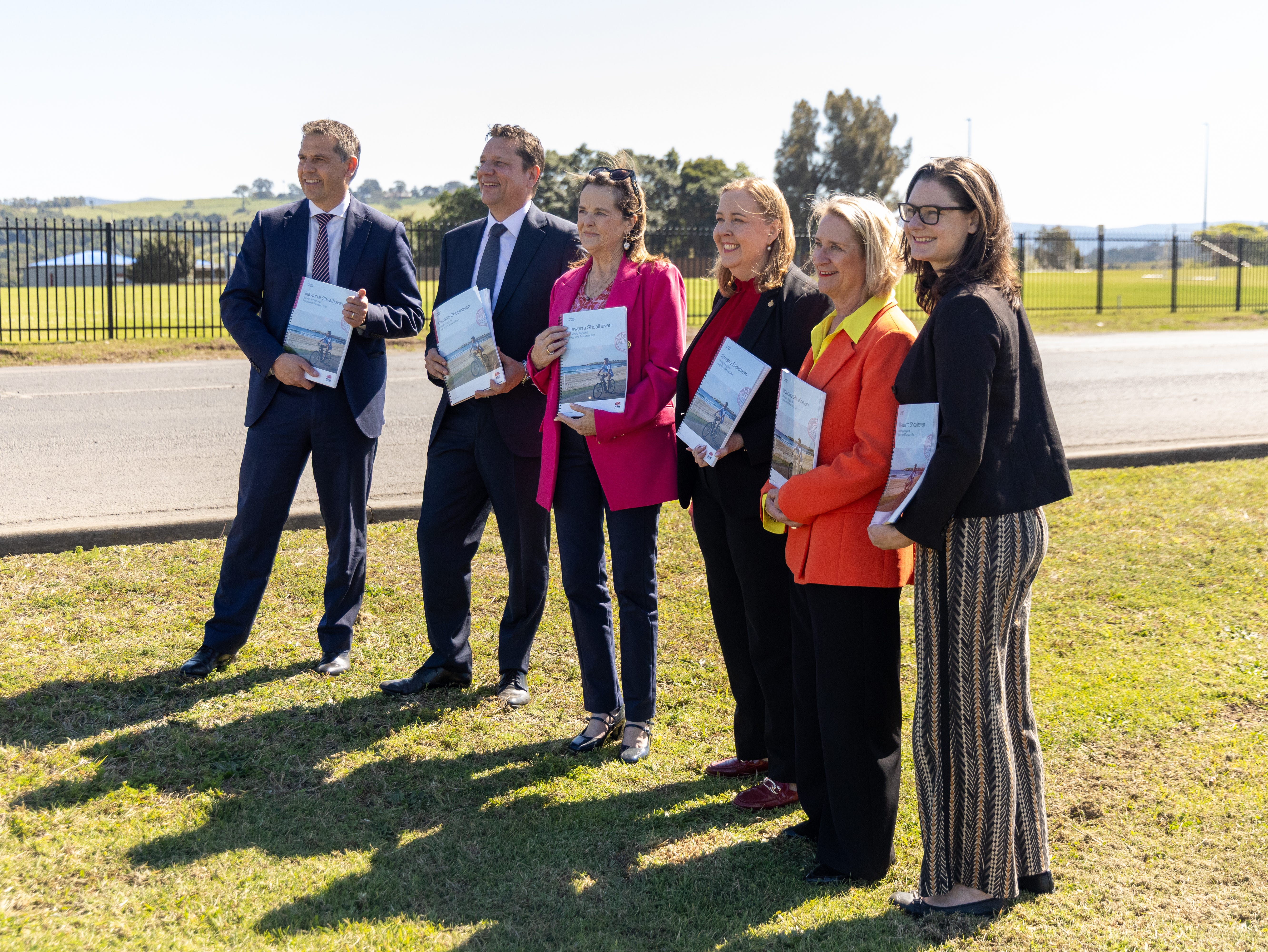
At 168 pages, the Illawarra Shoalhaven’s new 20-year transport plan is big on detail, but less clear on how its ambitions will be funded.
Its 47 initiatives span roads, rail, buses, freight and active transport as the region prepares for another 153,000 people and 59,000 jobs by 2041. The harder question is how much of it will be funded and delivered.
Among the initiatives are high-frequency, all-day bus corridors across the Illawarra, faster and more frequent South Coast Line services, improved road and rail connections to Port Kembla, south-facing motorway ramps at Dapto and further feasibility work on a Bulli bypass.
Some projects are already underway, while others remain at the investigation, business case or planning stage. The plan does not come with an overall funding package for its 47 initiatives.
“The Illawarra Shoalhaven is growing quickly, and we need to make sure our transport network grows with it, connecting people to jobs, education, health care and each other,” Regional Transport Minister Jenny Aitchison said when launching the plan at Shell Cove.
Transport for NSW says it has separately costed and programmed the next step for each of the plan’s short-term initiatives, but those costings and schedules are not included in the publicly released plan.
Instead, it says it will work with government agencies, councils and other stakeholders to identify funding opportunities.
Regional and business leaders have welcomed the long-term direction of the plan, while calling for funding commitments and clearer delivery timeframes.
Regional Development Australia Illawarra Shoalhaven CEO Selena Stevens said the plan was an important first step, particularly given the pressure the region’s growing population and economy would place on existing transport infrastructure.
“What we would love to see is funding commitments to make these key projects happen,” Ms Stevens said.
“We see this report as a road map, and a road map’s really only the starting point.”
“You can’t fund what you don’t know you need to fund. And so, for me, I see this report as the first step in what I hope is a long pipeline in terms of investment into the region.”
RDA Illawarra Shoalhaven is preparing its own report into regional transport connectivity, due later this year, which will examine connections into and out of the region and the economic cost of inaction.
Graham McCabe from Illawarra Public Transport Action Group said the plan’s proposed increase in bus frequencies was welcome, but argued the network also needed to be redesigned to make public transport a practical alternative to driving.
He said the current network was designed largely to provide coverage rather than direct, efficient connections, leaving some residents with little practical alternative to a car.
Mr McCabe pointed to the experience of one group member who lives in Stanwell Park and does not drive. She had been offered two jobs in Shellharbour but could not take them because public transport did not provide a practical way to get to work, particularly on weekends.
He said the need for better public transport would become more urgent as the region accommodated significant population and housing growth.
“These things take time to build. If you’re spending 10 years on investigations then you’re only starting to build then,” Mr McCabe said.
Business Illawarra has raised similar concerns about the gap between identifying the infrastructure the region needs and committing the money to deliver it.
Director Coralie McCarthy said the organisation supported the region’s long-term planning direction, but wanted infrastructure investment to keep pace with housing and economic growth.
Business Illawarra has made enabling infrastructure a central part of its housing advocacy, arguing new homes cannot be delivered at the scale required without corresponding investment in roads, rail and other essential infrastructure.
“Overall, the plan is something to be supported; it identifies many of the right locations and many of the same opportunities we’ve been advocating for through our Homes for Workers 2026 Policy,” Ms McCarthy said.
Business concern broadly is that there remains a significant gap between ‘planning for growth’ and funding the infrastructure needed to ‘deliver’ that growth.”
The organisation has previously called for investment in projects including Picton Road and improved freight and passenger rail connections between the Illawarra and Western Sydney, arguing better transport links are critical to housing supply, workforce mobility and economic growth.
“The plan gets the diagnosis right but stops short of providing the prescription,” Ms McCarthy said.
“The Illawarra Shoalhaven already knows where growth needs to occur. What we need now is a clear timetable and funding commitment for the infrastructure that unlocks housing.”
Key Highlights in the plan:
Being delivered now
Mount Ousley Interchange
Milton–Ulladulla bypass
South Coast Line rail improvements — Mariyung intercity trains are being rolled out
On the agenda for the next five years
Bulli bypass — business case/feasibility work to determine whether the bypass proceeds.
Dapto south-facing motorway ramps — business case/planning to improve access between the M1 and the West Dapto growth area.
High-frequency, all-day bus network — early planning for core corridors linking Wollongong, UOW, Corrimal, Thirroul, Warrawong, Dapto, West Lake Illawarra, Albion Park, Shellharbour and Shell Cove. The final plan describes this as planning rather than funded delivery.
Beyond 10 years
Outer Sydney Orbital connection to the Illawarra — preservation/planning for a potential future connection between the Illawarra and Hume Motorway around Menangle; this is a long-term proposition.
Maldon–Dombarton rail link — the long-proposed east-west freight rail connection remains in the plan as a future opportunity, tied to the eventual expansion of the Port Kembla container terminal or changes to planned rail upgrades. The corridor will continue to be preserved, but the plan makes no commitment to build it.
New and upgraded public transport infrastructure — the 10+ year plan envisages additional train stations and upgrades to existing train stations, bus stops and ferry wharves, including accessibility improvements, better passenger information and safer corridor crossings. It does not identify specific locations, costs or delivery dates.