

Wollongong in waiting game for massive 10,000 sq m government hub
The proposal could absorb a significant share of the city’s premium office space.

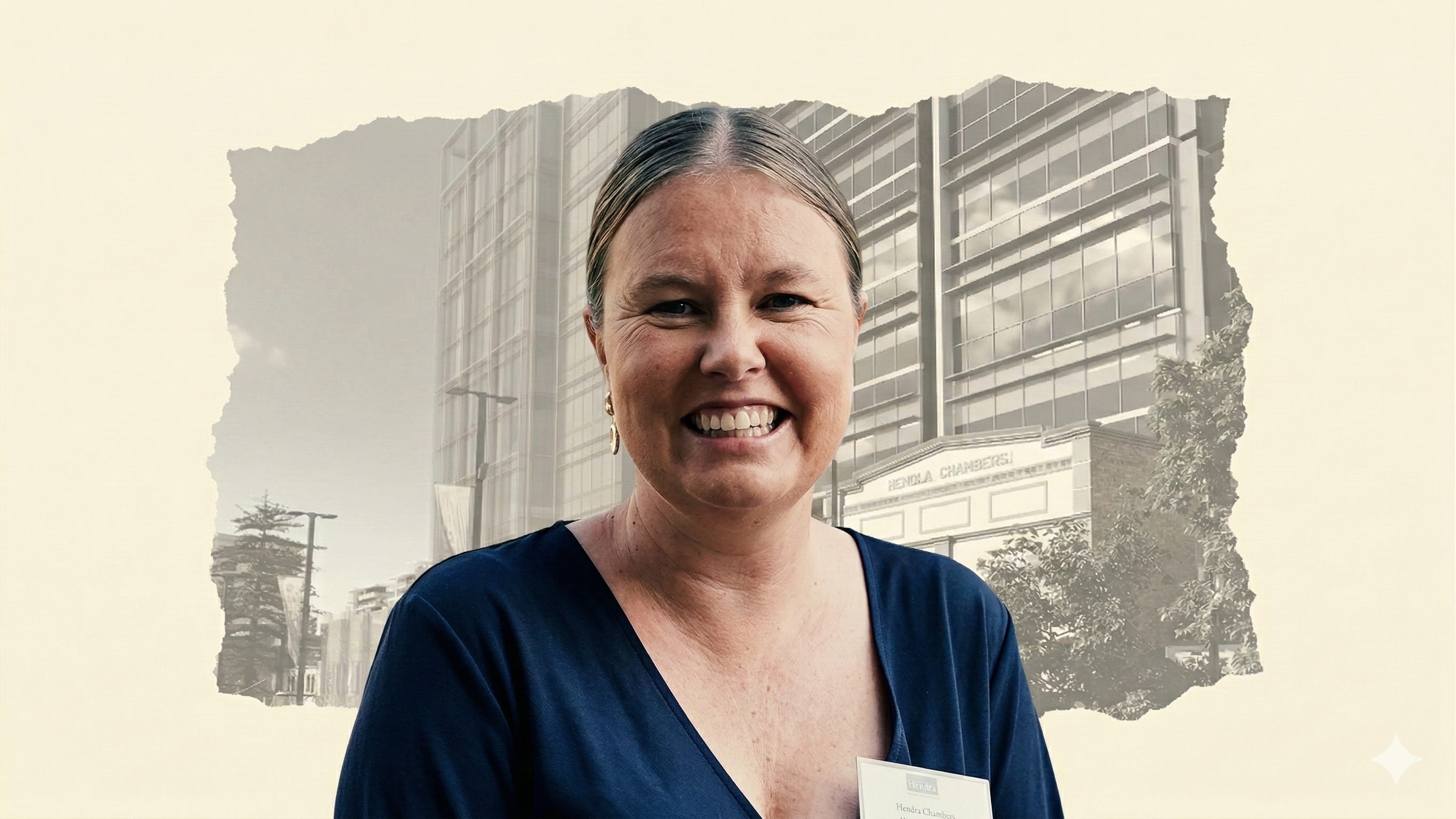
Wollongong’s office market is waiting on a decision that could reshape the city’s commercial landscape: a proposed 10,000-square-metre consolidated NSW Government workplace hub.
Property and Development NSW conducted a market testing process in 2024 for a single large office building designed for hybrid working.
Colliers Wollongong Director of Commercial Leasing, Kady Leggett, said the proposal could absorb a significant share of the city’s premium office space.
“There’s about 90,000 square metres of A-grade office space in Wollongong, so if the government took 10,000 square metres, that would be a major commitment,” she said.
“It would give a lot of confidence to the office market.”
Ms Leggett said up to 40,000–50,000 square metres of additional A-grade office space could come to market in the coming years, citing developments such as 111 Crown Street, which is currently under construction.
A major government tenancy would help support that pipeline, she said.
It is understood that the assessment process is ongoing and no commitments have been finalised.
In December 2025, Minister for Lands and Property, Steve Kamper, announced a new workplace hub would be built in Coffs Harbour to house 600 staff from six government departments.
Early in the year, a $5m workplace hub was announced in Nowra to accommodate staff from six government departments over two floors.
Further government workplace hubs have been announced in Newcastle, Dubbo and Sydney.
A spokesperson for the Department of Planning, Housing and Infrastructure said, “The NSW Government regularly assesses its accommodation needs across the state to ensure agencies have access to modern, flexible and cost-effective workplaces.
“A decision has not been made regarding the creation of a Government workplace hub in Wollongong. The Department continues to explore a range of options to support future workforce requirements, including potential opportunities in key regional centres.”
Smaller offices driving the market
While the government hub remains unresolved, changes in workplace behaviour are already reshaping the city’s office market.
Demand that once centred on 700 to 1,000 square metre floors is now typically below 300 square metres as companies shift to hybrid work.
“That’s the biggest change we’ve seen since COVID,” Ms Leggett said.
“If a business has 50 staff, they might only need 25 desks now because people are working from home some days.”
Large floors being split
The shift is forcing landlords to rethink the configuration of office buildings.
At the University of Wollongong’s Innovation Campus, a 1,300 square metre floor that had sat vacant was recently subdivided into smaller offices.
The move resulted in several tenants taking space on the same floor.
A similar strategy has been used in the Wollongong CBD.
When the NSW Director of Public Prosecutions moved from 166 Keira Street to a new A-grade building at 140 Keira Street, the 700 square metre floor it vacated was split into a 300 square metre tenancy and several smaller suites.
The space is now home to psychology and financial services firms, along with several smaller professional services.
B-grade buildings adapting
Despite new A-grade developments in the city, older buildings are holding up well.
According to Colliers data, B-grade office vacancy is now around 5 per cent, well below the typical 10 to 15 per cent market range.
That strength is largely being driven by small and medium-sized businesses taking suites under 300 square metres.
Government decision could shape the next phase
The next stage of Wollongong’s office development may depend on attracting larger occupiers.
That is why the government hub proposal is being watched closely.
“If that 10,000 square metre commitment happens, it will have a big impact on the market,” Ms Leggett said.
“It would really strengthen confidence in the Wollongong office sector.”
Whether the government proceeds with the proposal could help determine how quickly the next wave of office developments in Wollongong moves ahead.