


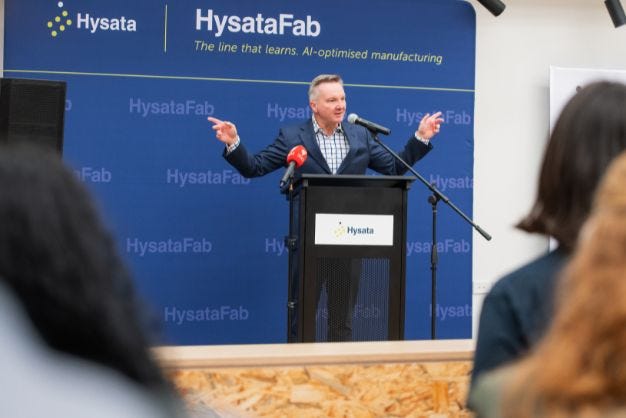
Hysata expects to create another 40 to 50 jobs at Port Kembla as it ramps up a near-$100 million manufacturing expansion backed by $49 million from the Federal Government.
The funding will help the Illawarra company move from developing its highly efficient electrolyser technology towards manufacturing it at commercial scale, with three production lines ultimately planned at its Port Kembla headquarters.
But the investment comes at an early stage in Hysata’s commercialisation.
Despite raising more than $220 million from global investors, the five-year-old company announced its first binding megawatt-scale commercial order only in June, with the system due to be delivered to an unnamed international customer in the first half of 2027.
Hysata makes electrolysers — the machines used to produce green hydrogen from water using renewable electricity — and says its technology can produce more hydrogen using less electricity than conventional systems.
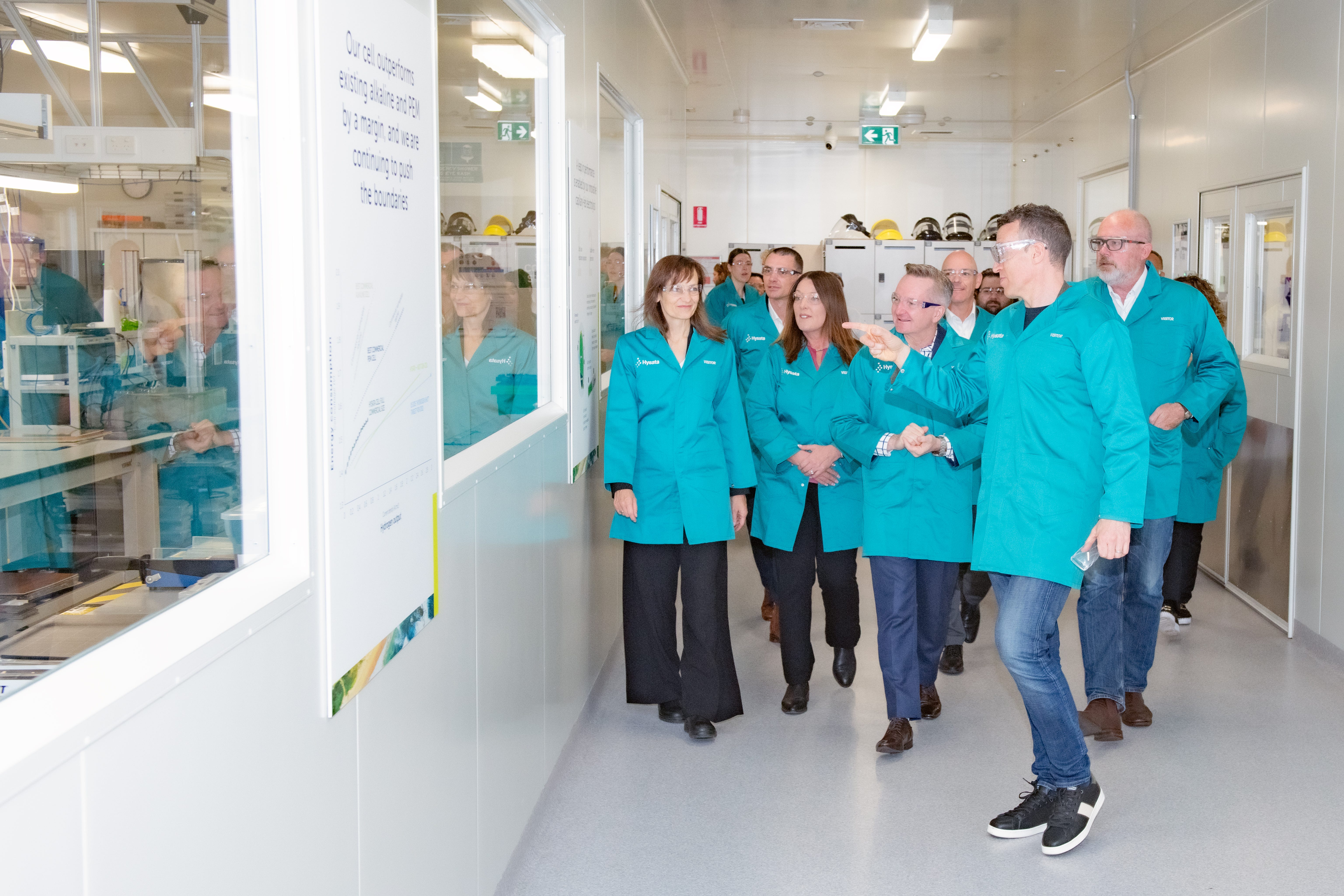
Chief executive Paul Barrett said the new manufacturing project was expected to add another 40 to 50 jobs over its lifetime to Hysata’s existing workforce of more than 120.
“I think this is a jobs story,” Mr Barrett said.
“We’re using AI to complement our engineers and essentially make better decisions to make manufacturing more efficient. So it’s actually creating jobs for our team.”
Mr Barrett said components produced on the new line would go into Hysata’s first commercial export order.
The $49 million Australian Renewable Energy Agency (ARENA) grant will meet about half the cost of the manufacturing project, with Hysata matching the funding from private capital.
Climate Change and Energy Minister Chris Bowen and Industry and Innovation Minister Tim Ayres announced the funding at Hysata on Friday, with Cunningham MP Alison Byrnes and Whitlam MP Carol Berry also attending.
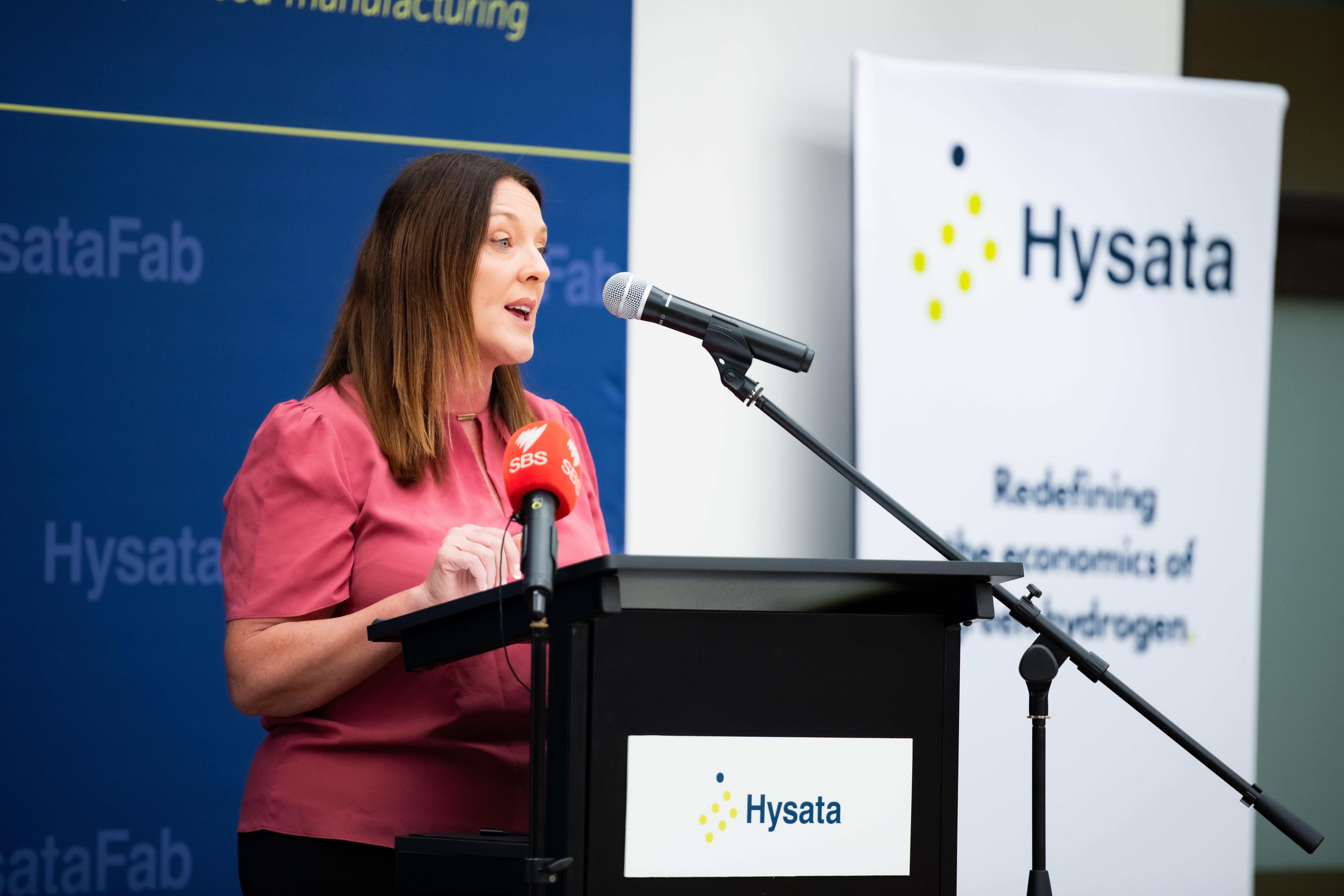
Mr Bowen also used the Port Kembla announcement to make the case for green hydrogen’s future, days after acknowledging on ABC’s 7.30 that the sector had developed more slowly and at greater cost than hoped.
In that interview, Mr Bowen said hydrogen had been “slower and more expensive” than anticipated, while rejecting suggestions the technology was dead.
At Hysata on Friday, he returned to the issue.
“There used to be a lot of hype that green hydrogen was going to heat our homes and drive our cars,” Mr Bowen said.
“And now the hype is green hydrogen is dead. It’s not going to happen. It’s never going to work.”
He said the reality lay between those two positions.
“Green hydrogen has a future, an important future in our country and in the world.”
Mr Bowen said the difficulties facing hydrogen showed that not every technology in Australia’s energy transition would develop as early forecasts predicted.
“Some things are a bit harder. And green hydrogen is a bit harder,” he said.
“But for those who say that green hydrogen doesn’t have a future, I say, well, you show me how we’re going to decarbonise heavy industry.”
He argued that Australia should electrify industries wherever possible, while hydrogen would remain important for applications that could not readily be electrified, particularly in heavy industry.
Hysata is betting that efficiency can help overcome one of the industry’s biggest problems — the cost of producing green hydrogen.
Its capillary-fed electrolyser operates at 95 per cent efficiency, according to the company, requiring 41.5kWh of electricity to produce a kilogram of hydrogen. Hysata says that equates to about 20 per cent more hydrogen from each megawatt of electricity than incumbent electrolyser technology.
The company also launched HysataFab on Friday, an AI-optimised manufacturing platform designed to make the production process more efficient.
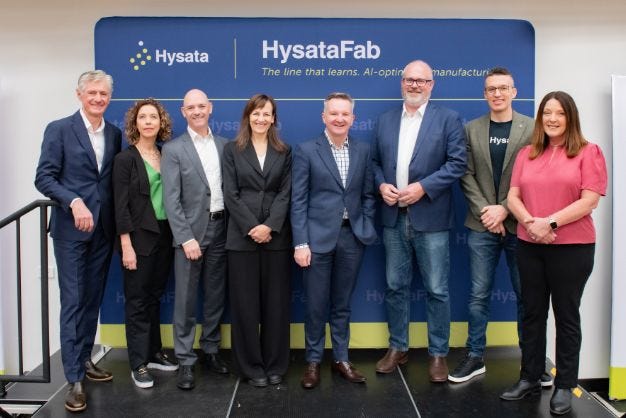
Hysata says the system combines real-time monitoring, robotics and inline quality testing and can increase output from the same physical production line by up to 15 per cent.
The first electrode production line is now operating, with membrane and cell and stack manufacturing lines to follow.
The facility will initially have capacity to produce 50MW of electrolysers a year on a single-shift basis. Hysata says continuous operations could eventually increase that to 200MW a year, which would make Port Kembla the largest electrolyser manufacturing facility in the southern hemisphere.
ARENA chief executive Darren Miller said the funding was designed to help bridge the difficult gap between developing Australian technology and manufacturing it commercially.
“Turning breakthrough technology into commercial-scale manufacturing is one of the hardest steps in innovation, and it is where ARENA can make the most difference,” Mr Miller said.
“Hysata’s efficiency changes the cost base of green hydrogen. This grant is about building the capability to manufacture it here, at scale.”
Mr Barrett also acknowledged the shift in sentiment around hydrogen, arguing the retreat from some of the industry’s earlier ambitions was healthy.
“The hype around hydrogen has come out of the market, and that is healthy. We never chased it,” he said.
“Hydrogen does not need to compete with electrification. You use it where you need a molecule, not an electron. In steel, in fertiliser and in refining, there is no substitute for it.”
Hysata has also completed a field trial with ACWA Power in Saudi Arabia and has joint development agreements with POSCO and Vestas. It says it is working with major customers across a multi-gigawatt pipeline.


