


The Wollongong MP has used a speech to NSW Parliament to argue against what he calls “nostalgia politics” - the temptation to respond to complex modern problems by promising a return to simpler times.
Speaking to The Pulse after the speech, Mr Scully said it was prompted by national and global political debates and “populist policy prescriptions” that could sound appealing but failed to take account of how the world now operated.
“If there were simple solutions to complex problems and challenges, they would have been introduced by now,” he said.
“It’s why I made the point that romanticising the good old days often omits its worst aspects.
“A white picket fence view of the world with the policy solutions it generates will end up reducing our living standards, and it certainly doesn’t prepare us for AI-enabled workplaces or external economic shocks like the current oil crisis.”
In his parliamentary speech, titled Nostalgia Politics, Mr Scully said rapid change could understandably unsettle communities, pointing to new housing, transforming industries and technology as sources of concern.
He argued those concerns about community, identity and the costs of change deserved to be taken seriously, but warned governments against responding by trying to recreate the past.
“Yet relying on the past leaves us unprepared for the realities ahead: an AI-enabled workplace, sustainable population growth, housing affordability pressures and the care needs of an ageing society,” Mr Scully told Parliament.
“Trying to relive past experiences will not fix supply-chain shocks, semiconductor shortages, rapid technological disruption or a globalised economy.”
Mr Scully said afterwards that Wollongong’s own experience showed how significant change could be managed.
The region had undergone decades of transformation but had largely avoided what he described as the worst aspects of the current political debate.
“Wollongong is a good example of working together to work through change while preparing for the future,” he said.
“While it has meant some challenging conversations and difficult decisions, I think, generally, the region has managed things well to date, and I believe that we can continue to do so.
“There is still more to do, but I think we have the direction well defined and understood.”
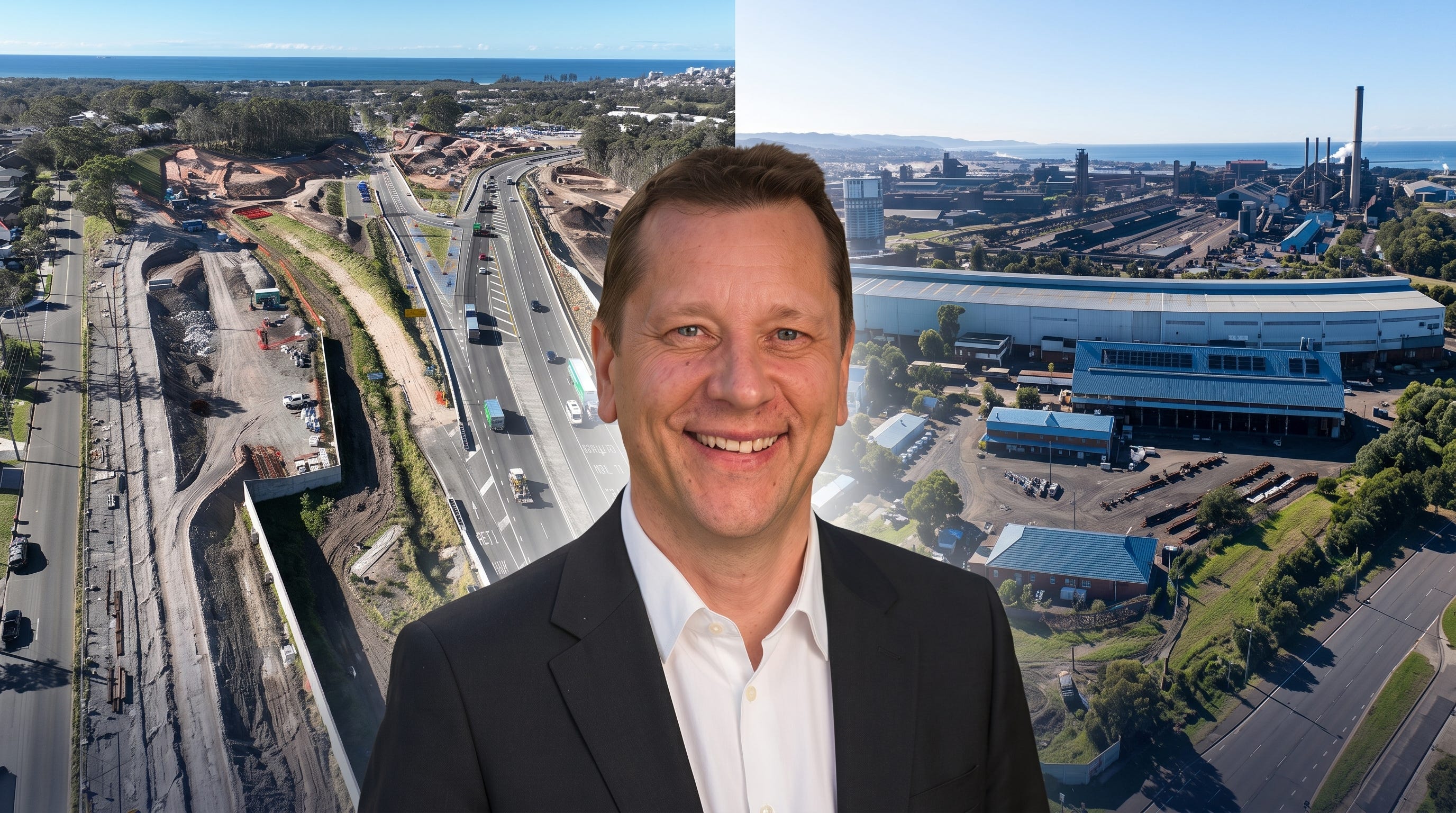
Mr Scully pointed to the Mount Ousley Interchange, investment in the health precinct and Shellharbour Hospital and the rezoning of surplus BlueScope land as examples of different levels of government, business, the labour movement and community working together with the Illawarra’s long-term interests in mind.
He said that willingness to work together was one of the things Wollongong had got right through successive periods of change.
“People work together and work to prioritise those things that will put us in the best position for the future, even if things might not get done as quickly as we might like,” he said.
“In Wollongong, all three levels of government are working well together with a shared objective, and governments in Canberra and Macquarie Street recognise the strengths and potential of the region and are willing to back it.”
The argument comes as the Illawarra faces another significant period of transformation. The recently released Illawarra Shoalhaven Regional Plan anticipates the region will need to accommodate more than 117,000 additional homes and 101,000 new jobs by 2046, alongside population growth, technological change and the continued evolution of its traditional industrial base.
In Parliament, Mr Scully acknowledged that concerns about the impact of new housing and investment on schools, traffic, local services and neighbourhood character were valid.
But he argued the answer was “orderly, locally sensitive change” rather than resisting development or attempting to preserve industries and communities as they were.
“We cannot simply turn back the clock,” he said.
“Freezing entire industries in an earlier era or scapegoating migrants distracts from the real task: managing change so that it benefits people and communities.”
Mr Scully also used the speech to address the sentiment labelled “Gen Z socialism”, saying younger people who had grown up amid economic uncertainty and rising housing costs had legitimate concerns about fairness and access to housing.
But he argued the response should focus on practical reforms that expanded opportunity, lifted productivity and spread the benefits of economic growth more widely.
Mr Scully pointed to the recently released draft Illawarra-Shoalhaven Plan as part of preparing the region for its next period of growth and change.
“There is no clearer example of embracing that aspiration and preparing us for the future than the draft Illawarra-Shoalhaven Plan that I released recently,” he said.
“Focusing on the past preserves memory and teaches lessons, but nostalgia is a poor guide for tomorrow,” Mr Scully told Parliament.


